
Math Factoring Brochure
Math Factoring Brochure - Polynomials are classified by their degree and number of terms. Factoring polynomials brochure project 3rd quarter. A title for the factoring method an explanation of the factoring method: Design a cover with the title “factoring polynomials”. How can you factor a polynomial? The process for factoring the sum and difference of cubes is very similar to that for the difference of squares. When factoring by grouping, you sometimes have to rearrange the terms to find a common. Is it a sum of cubes? Method labeled and fully explained, very easy to follow and understand. The solutions to the resulting linear equations are the solutions to the. You can add or subtract polynomials by simply. The solutions to the resulting linear equations are the solutions to the. Brochure with minimal color and creativity. Classify each polynomial by degree and number of terms. This document provides instructions on factoring different types of polynomials, including: Read, math is correct as is. Show an example of a. How do you know when to use the method? Factor out the greatest common monomial factor. Factoring polynomials brochure project 3rd quarter. Check for one of the following patterns and factor if possible: Free rubric builder and assessment tools. On each page/slide make a tutorial for the following topics: 3 x2 + 6 = 3 ( + 2) 2. Factor out the gcf of each group and then factor out the common binomial factor. To factor a polynomial completely, you should try each of these steps. Factor out the greatest common monomial factor. When factoring by grouping, you sometimes have to rearrange the terms to find a common. This document provides instructions on factoring different types of polynomials, including: Follow the guide below to help you through the factoring process. Identify the gcf of the polynomial check the coefficients for a gcf. Factoring polynomials using the greatest common factor. To factor a polynomial completely, you should try each of these steps. Only method labeled or explained, but not both. Factoring the difference of two. The process for factoring the sum and difference of cubes is very similar to that for the difference of squares. Greatest common factor (gcf) difference of squares grouping. Is it a difference of cubes? Free rubric builder and assessment tools. To factor a polynomial completely, you should try each of these steps. Factor out the gcf of each group and then factor out the common binomial factor. Method labeled and fully explained, very easy to follow and understand. Only method labeled or explained, but not both. Follow the guide below to help you through the factoring process. You can add or subtract polynomials by simply. Factoring the difference of two. Polynomials are classified by their degree and number of terms. Show an example of a. Regardless of the method used to factor polynomials, the importance of factors is their use in solving. Greatest common factor (gcf) difference of squares grouping. Polynomials are classified by their degree and number of terms. Classify each polynomial by degree and number of terms. Identify the gcf of the polynomial check the coefficients for a gcf. Check for a gcf ! Factoring brochure rubric excellent (25pts) good (20pts) fair (15pts) poor (5pts) brochure creative brochure with a variety of color and high creativity. When factoring by grouping, you sometimes have to rearrange the terms to find a common. 3 x2 + 6 = 3 ( + 2) 2. Check for one of the following patterns and factor if possible: Factoring polynomials using the greatest common factor. Factoring polynomials in the same way that dividing real numbers “undoes” the process of multiplication, factoring a. Calculators with symbolic manipulation features can factor polynomials directly. 3 x2 + 6 = 3 ( + 2) 2. Once the quadratic expression is equal to zero, factor it and then set each variable factor equal to zero. Can it be factored again? On each page/slide make a tutorial for the following topics: Check for one of the following patterns and factor if possible: Free rubric builder and assessment tools. The process for factoring the sum and difference of cubes is very similar to that for the difference of squares. Check for a gcf ! Greatest common factor (gcf) difference of squares grouping. The solutions to the resulting linear equations are the solutions to the. We first identify \(a\) and \(b\) and then substitute into the. Look for a difference of two squares or a. Free rubric builder and assessment tools. A title for the factoring method an explanation of the factoring method: When factoring by grouping, you sometimes have to rearrange the terms to find a common. Identify the gcf of the polynomial check the coefficients for a gcf. Factoring polynomials in the same way that dividing real numbers “undoes” the process of multiplication, factoring a polynomial separates it into the product of two or more other. You can add or subtract polynomials by simply. 3 x2 + 6 = 3 ( + 2) 2. Regardless of the method used to factor polynomials, the importance of factors is their use in solving. Factoring brochure rubric excellent (25pts) good (20pts) fair (15pts) poor (5pts) brochure creative brochure with a variety of color and high creativity. Check for a gcf ! Check for one of the following patterns and factor if possible: On each page/slide make a tutorial for the following topics: Method labeled and fully explained, very easy to follow and understand.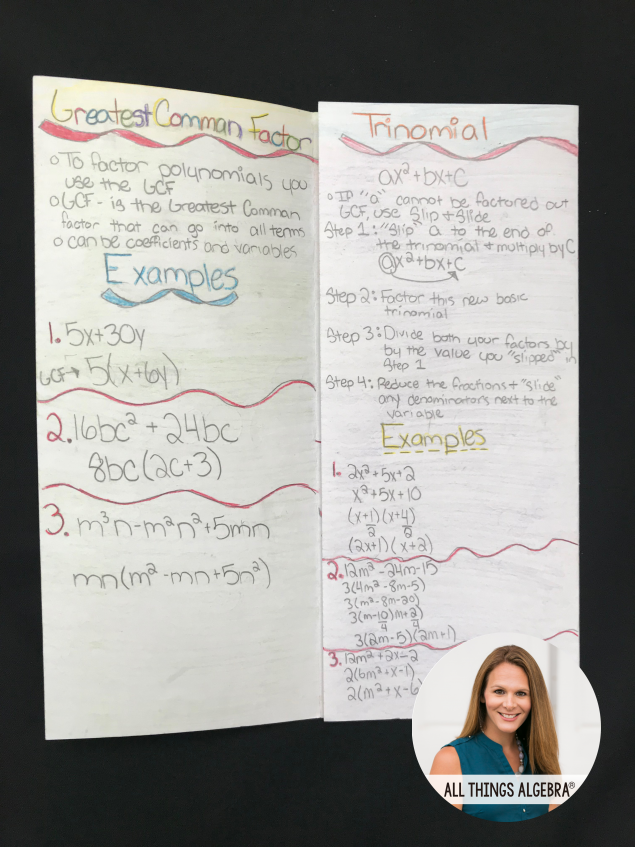
Factoring Polynomials Brochure Project
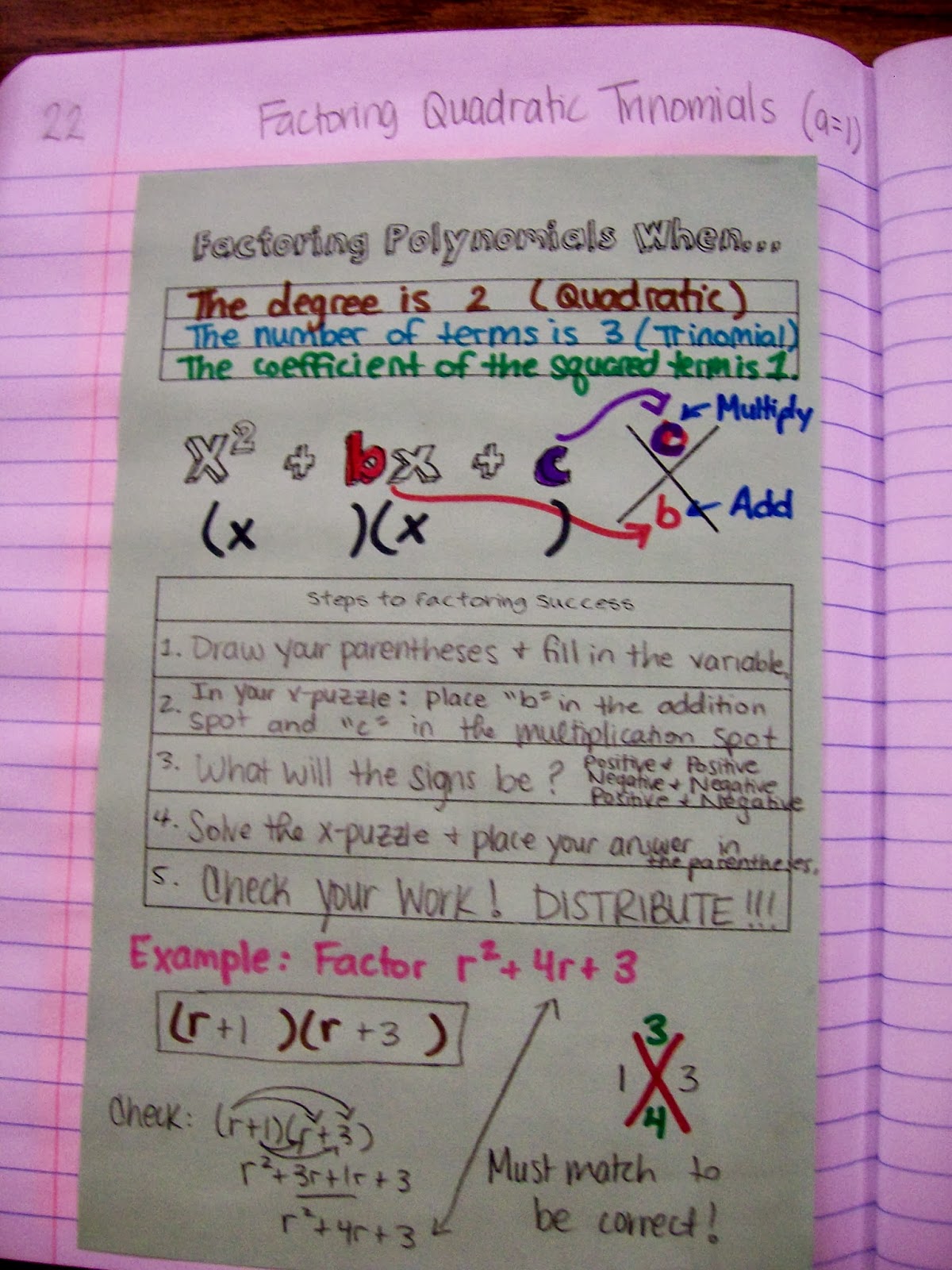
Factoring Quadratics Graphic Organizers Math = Love

Factoring Trinomials Foldable

Factoring polynomials brochure project Artofit

Factoring Polynomials Graphic Organizer Lindsay Bowden

18 Algebra Posters Printable Math Posters Math Posters Etsy in 2024

Factoring Polynomials Brochure Project
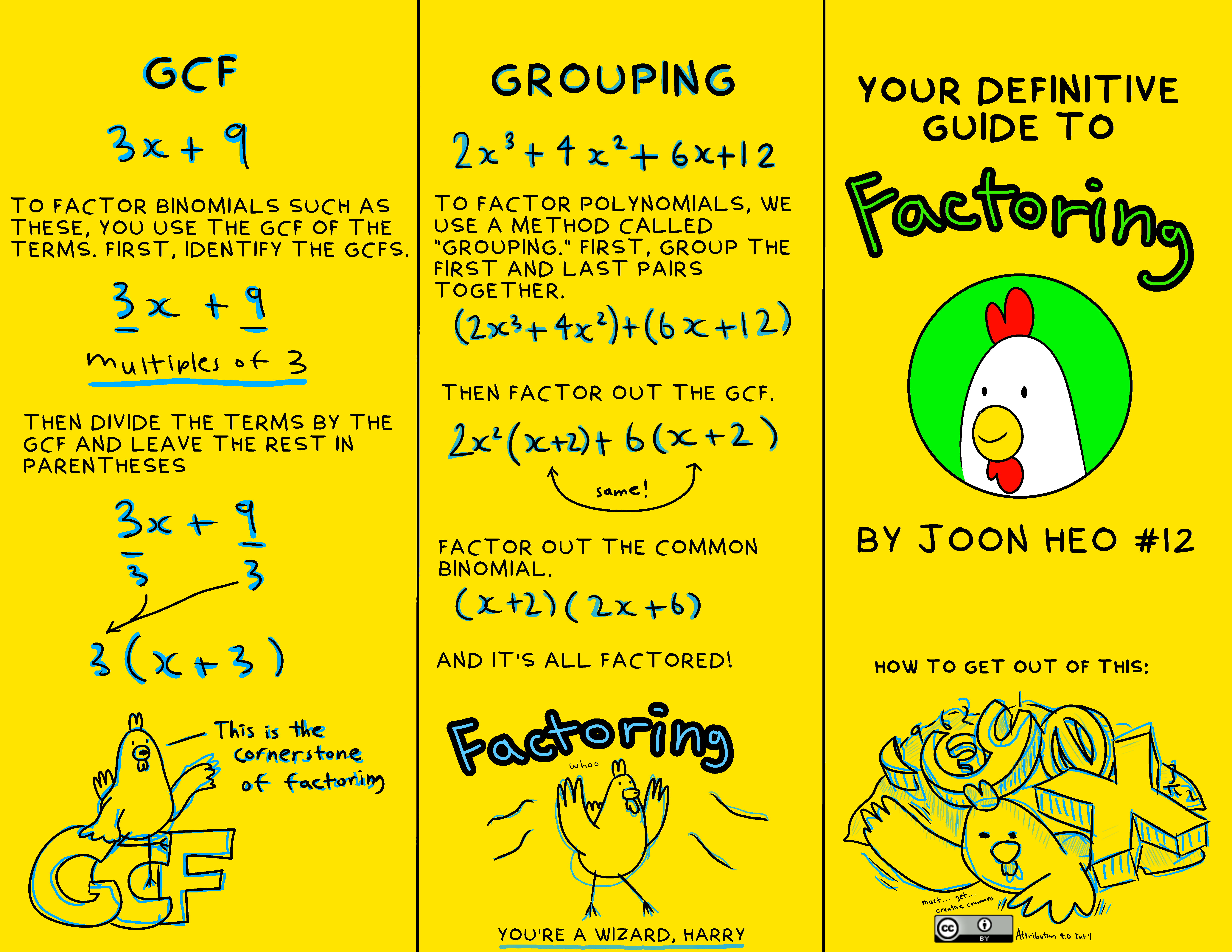
Factoring Brochure outside by JoonChicken on DeviantArt
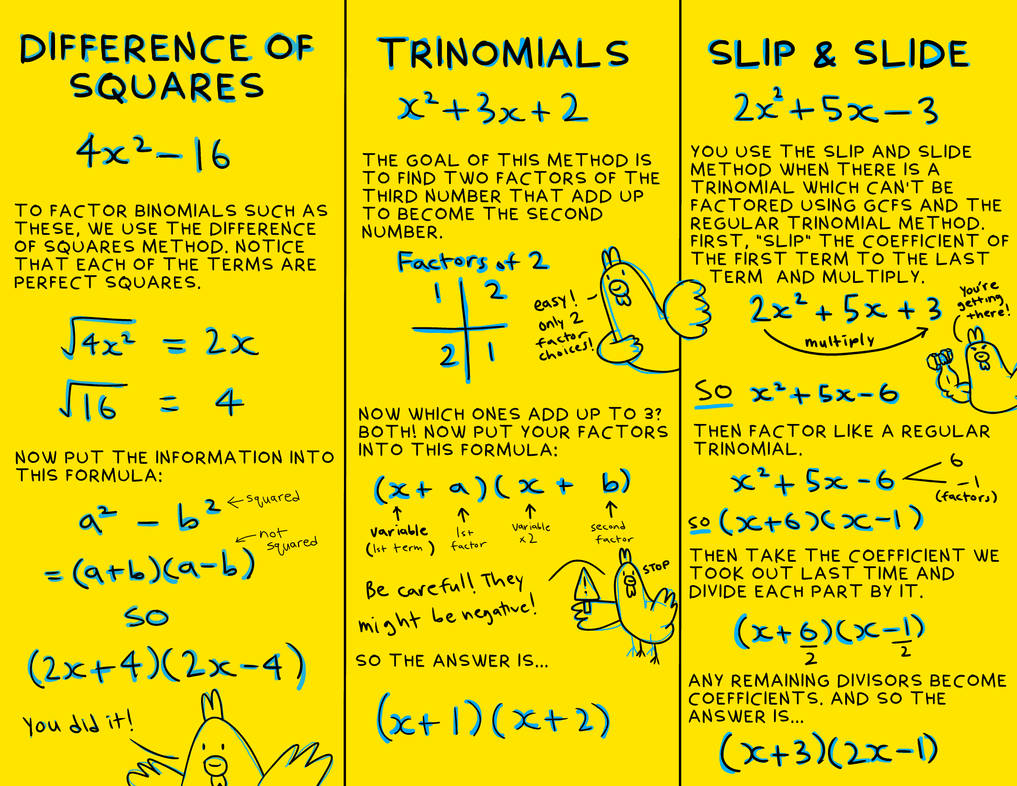
Factoring Brochure middle by JoonChicken on DeviantArt

Mathematics course, math lessons brochure template layout. Flyer
How Can You Factor A Polynomial?
How Do You Know When To Use The Method?
Follow The Guide Below To Help You Through The Factoring Process.
Classify Each Polynomial By Degree And Number Of Terms.
Related Post: